Transform Execution & Data Flow
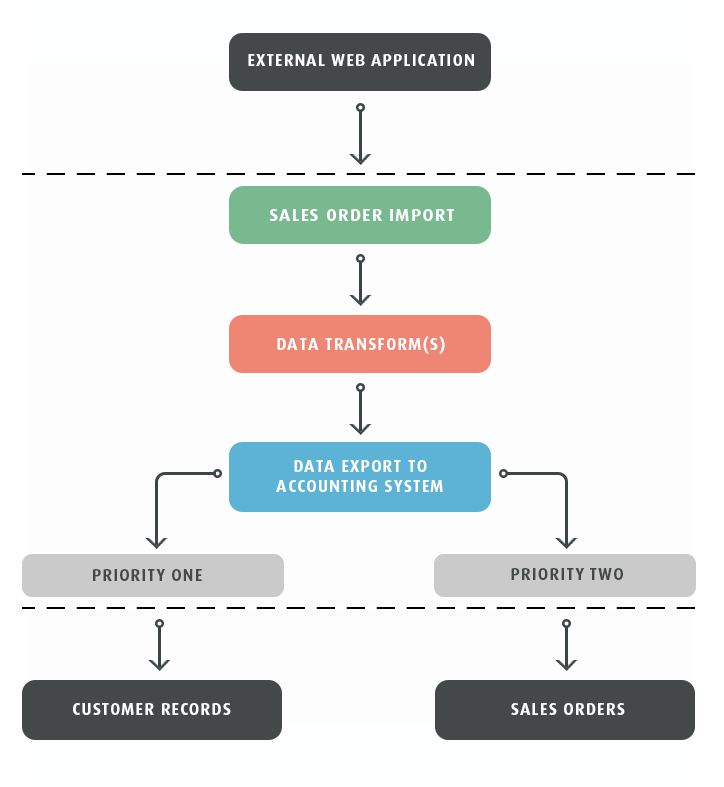
Each integration is made up of one or more transforms, which IMan runs in their specified order.
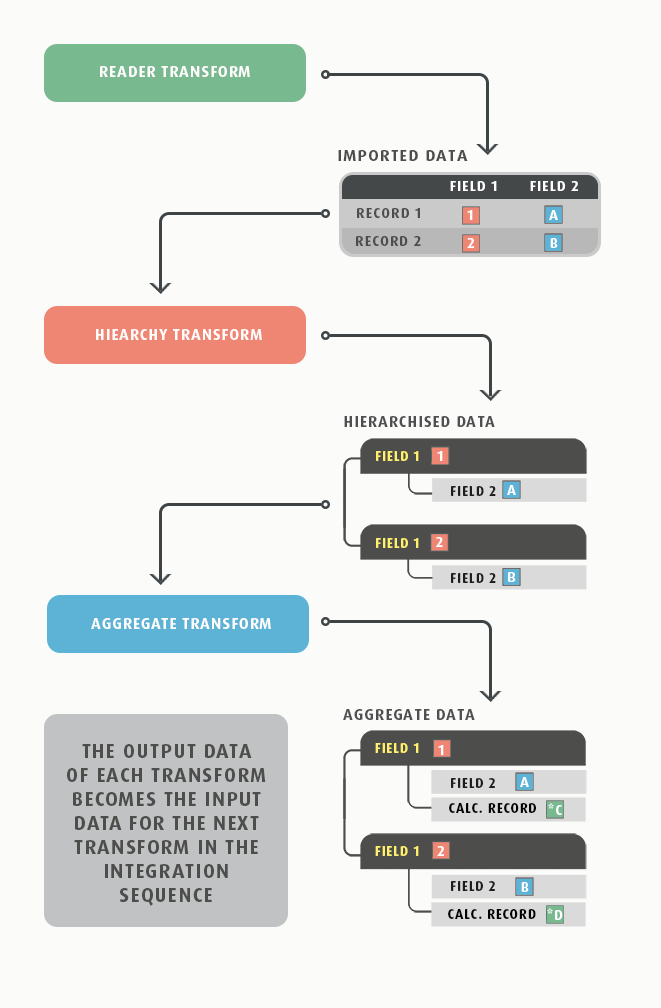
IMan processes data in batches and transforms each batch in turn.
When one transform completes, its dataset becomes the input for the next transform in the sequence. IMan treats each transform as an independent unit.
IMan can run several batches of data through an integration's transforms at the same time, but the transforms still work independently of each other.
Priority
When a parent transform has more than one output, you set a priority on each child transform to tell IMan the order in which to process them.
IMan shows the transform priority drop-down only when the parent transform has more than one output.
The priority sets the order in which the child transforms run.
If you change the priority of a transform, IMan adjusts the priorities of the related transforms to match.
Example
A sales order import from an external web system needs both the customer records and the sales orders. The accounting system needs the customer records first, before it can record the sales orders.
In this situation, set the output for the customer records to '1' and the sales orders to '2'.