URL Paging
Use the URL pager when a parameter in the URL tells the service which page, or which record offset, to return. IMan adds the parameter to the URL on the first request and increments it on each request after that, until the service returns a page with no records.
URL paging has four fields. Between them they cover the different ways services implement it.
- Paging Start At: the value the parameter takes on the first request. Typically
1, for the first page or record;0for a service whose offset counts from zero. - Paging Path/Parameter Name: the name of the parameter in the URL.
- Paging Increment By: how much the parameter increases by on each request.
- Paging Increment/Parameter Name: optional. When set, IMan adds a second parameter of this name carrying the Paging Increment By value. This tells the service the page size or the number of records to return.
Leave the parameter out of the reader's URL
IMan adds the page parameter itself. If the reader's URL already carries it, IMan reads the value there and starts one increment past it, so ?page=1 in the URL makes the first request page 2.
Page only, with the service's default page size
Setting a page parameter tells the service which page of data to return. Some services have a fixed or default page size: with a default of 50, page one returns the first 50 records, page two records 51 to 100, and so on.
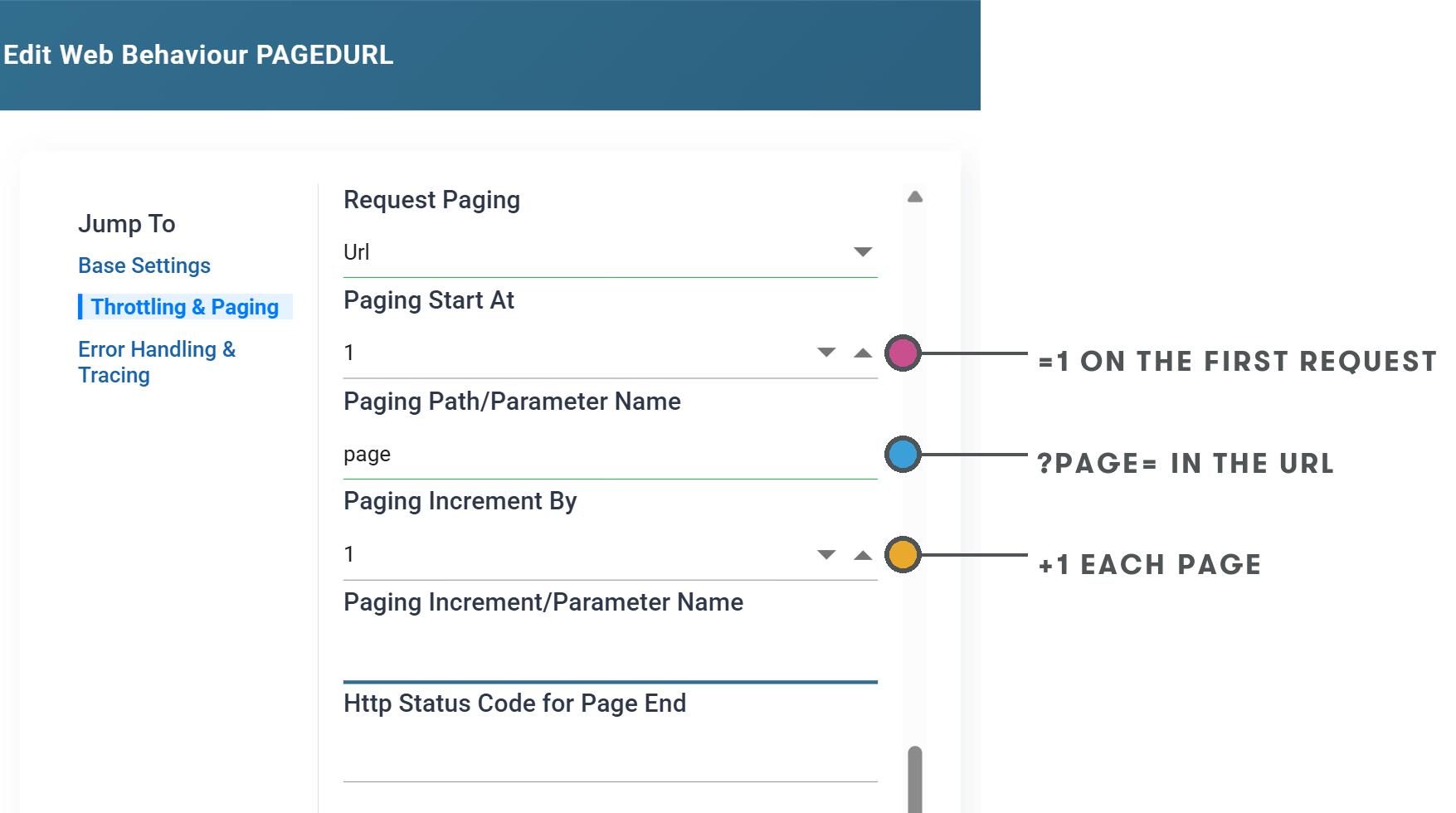
Resultant URLs:
Page and page size
Where the service lets you choose the page size, set it as a fixed parameter in the Base Url or the reader's URL. IMan pages the page parameter as before. With a page size of 100, page one returns the first 100 records and page two records 101 to 200.
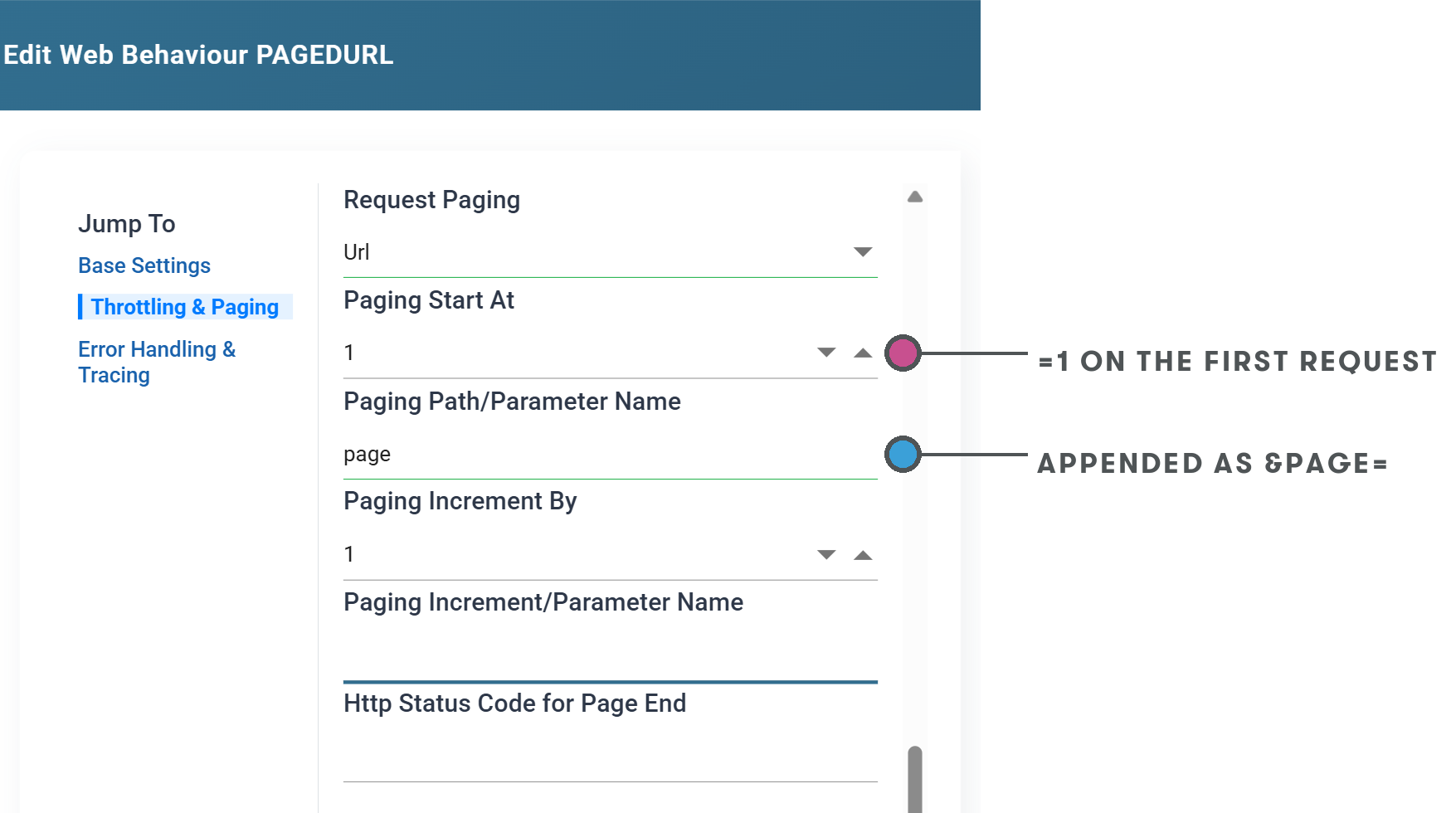
Resultant URLs:
Offset and size
The other common scheme is an offset. Instead of a page number, IMan tells the service the number of the first record to return and how many to return. The start parameter is the offset, Paging Increment By is the number of records per request, and Paging Increment/Parameter Name names the parameter that carries it. With an increment of 50, the first request returns records 1 to 50 and the second 51 to 100.
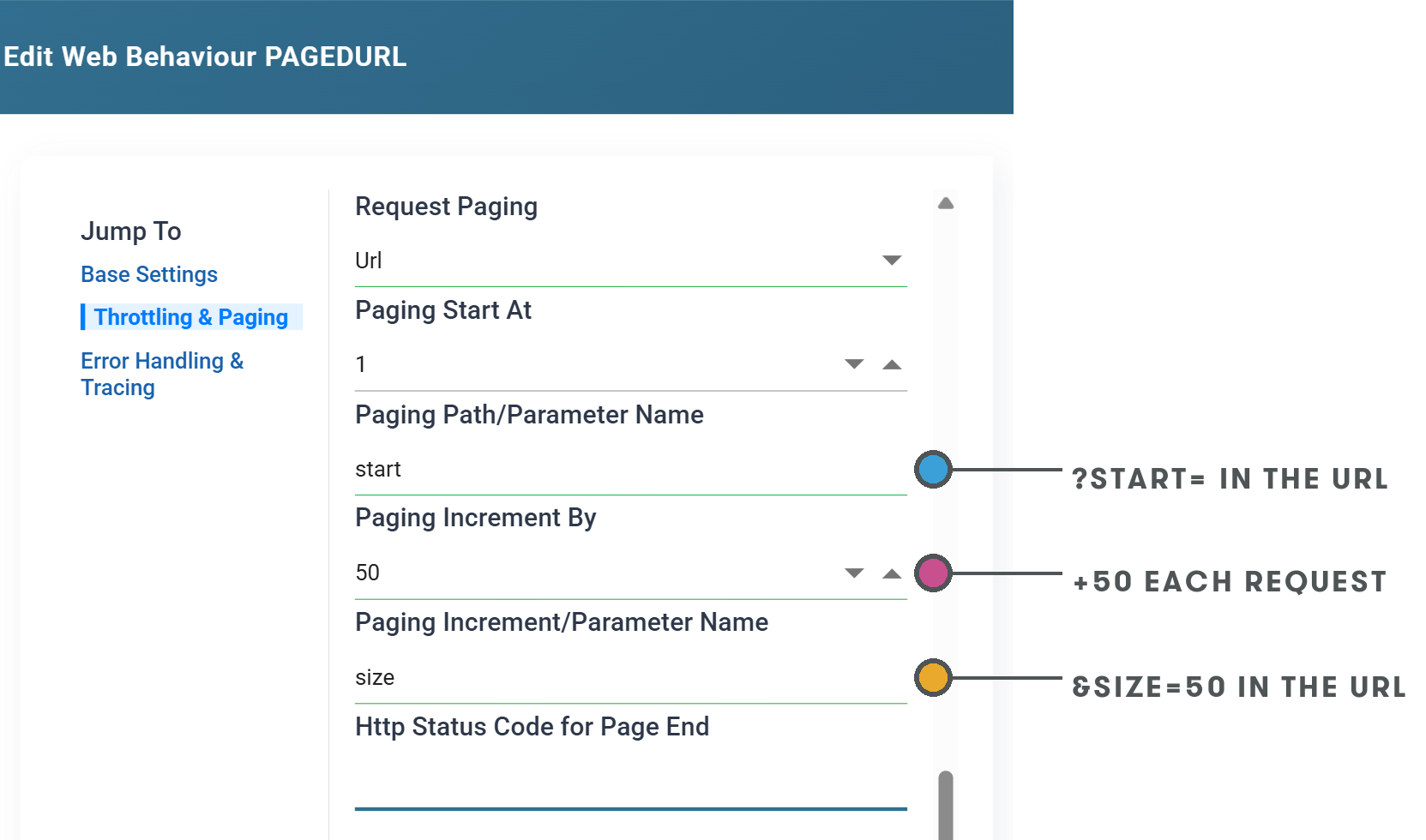
Resultant URLs:
Check whether the service counts records from 0 or from 1. For a zero-based offset, set Paging Start At to 0. Starting at 1 skips the first record on every run, with no error or warning.